Blog de Maria Elisa Castellanos Solá. Sobre o Homem, o Ser, a Sociedade, as Circunstâncias e o Futuro. Um arquivo pessoal de caráter multidisciplinar que compartilho com o público.
É errado chamar um político de ladrão. O que ele faz é pior.
Mata doentes e mutila a esperança de melhorar a vida
Já escrevi aqui sobre a
corrupção, porém não gosto de me repetir, nem de me limitar à
indignação. Mas vale a pena, no curso das operações Lava-Jato e Juízo
Final, firmar alguns pontos fundamentais.
Primeiro: "república" é coisa pública, bem comum. A conduta mais
antirrepublicana que há é vulnerar, atacar, destruir o bem comum. Ou
seja, nada é mais inimigo da república do que a corrupção, que privatiza
ilegalmente o que pertence a todos. É um erro, que devemos à escola,
pensar que o contrário da república é a monarquia. Distinguir repúblicas
e monarquias é coisa do século XIX, quando estas últimas eram o que
hoje chamamos de ditaduras.
Desde a vitória dos Aliados na II Guerra Mundial, quase todas as
monarquias são constitucionais. As monarquias escandinavas visam mais o
bem comum do que muitas "repúblicas" do resto do mundo. Devolvamos à
República seu sentido forte: há república quando se visa o bem comum.
Ser contra a república não é questão de opinião, de achar bonito um rei.
É crime, é praticar atos desviando de sua finalidade o viver em comum.
O corrupto não é ladrão: ele mata e mutila vidas
Segundo: na América Latina nos acostumamos ao patrimonialismo, uma
das versões ibéricas do que hoje chamamos corrupção. Consiste em o
governante tratar a coisa pública como se fosse seu patrimônio privado.
Toda confusão do público e do privado, quando favorece o detentor do
poder político, vai dar em patrimonialismo. Por exemplo, se um
governante usa os carros oficiais para transportar familiares (a não ser
que haja razões claras, consensuadas, de segurança para tal). Nossos
governadores e presidente, que moram em palácios e não gastam nem com a
comida ou a roupa, dão exemplo disso. Mas este é só um detalhe.
Porque, terceiro: não é verdade que "somos todos corruptos". Não
somos, não. Estou convencido de que a grande maioria é honesta. Não
vamos desresponsabilizar os corruptos por sua corrupção dizendo que ela
pertence à "cultura brasileira". Nossa sociedade pode ser um tanto
leniente com isso, mas mesmo isso está mudando. Já comentei aqui a
modelo que contou à "revista Trip" que usava sua beleza para não levar
multas dos guardas. Falou isso num tom de flerte, mas mesmo assim os
leitores caíram matando. Nossa leniência diminuiu muito, e isso é ótimo.
Também temos mais informações sobre desvios de dinheiro, além de menos
tolerância por isso.
Quarto, talvez mais importante: não é verdade que todos os atos de
corrupção se equivalem. Sim, é errado agradar o policial ou o atendente,
mas montar um "clube" para furtar centenas de milhões de dólares da
Petrobras é coisa muito diferente. Não é apenas uma questão de tamanho. É
uma diferença de concepção. Os pequenos erros morais de cada dia não
estão na mesma lógica do assalto organizado aos cofres públicos.
Precisamos desenvolver este ponto. Suponho que a lógica seja a inversa:
não é porque vários corrompem policiais que uns pouquíssimos atacam o
erário público. Talvez seja porque esses pouquíssimos roubam tanto que
aqueles outros perdem a crença na honestidade, na decência. O que
inspira uma cultura ampliada de desistência do bem comum é o mau exemplo
dos poucos.
Mas, mais que isso, penso que um grande desafio à ética é: em que a
roubalheira dos grandes se distingue dos pecadilhos dos pequenos? Eu
mesmo, por enquanto, não tenho resposta completa, e lanço este desafio
aos colegas que também trabalham com a ética. Mas penso que precisamos
distinguir o furto do bem privado e o desvio do bem público. A ideia de
que o corrupto é "ladrão", tão pertinaz em nossa sociedade, se inspira
na sua comparação com quem furta indivíduos. Mas as vítimas do corrupto
não são individuais, são a sociedade inteira. Daí que, talvez, seja mais
correto pensar que eles não se limitam a furtar dinheiro (no caso,
público), mas - acima de tudo - impeçam o bom uso desse dinheiro, por
exemplo, em saúde, educação, outros serviços essenciais. Impedem que
doentes sejam salvos, em hospitais que não deixaram existir ou
funcionar. Impedem que crianças e adolescentes sejam educados, em
escolas que devido a eles não existem ou não funcionam. Seu crime é
contra a vida, que eles abreviam ou mutilam. Abreviada, a vida dos que
morrem antes da hora. Mutilada, a dos que vivem mal. Por que não
considerar assassinos os corruptos? Pelo menos, no nível simbólico.
Talvez por isso, faça sentido a reforma legal que, na esteira das
manifestações de 2013, tornou hediondo o crime de corrupção. Voltarei a
este tema no futuro, mas observo que o hediondo, propriamente dito, é
uma pessoa ver o sofrimento de outra e ser indiferente a ele, ou até
sentir prazer graças a ele. Isso é desumano. Isso é desumanidade. Mas
isso só acontece em alguns crimes presenciais - geralmente, crimes
cometidos por pobres. Ora, a corrupção é um crime não-presencial; mais
que isso: indireto, abstrato. O corrupto não vê a sua frente as crianças
desnutridas, as pessoas miseráveis porque privadas de educação, os
mortos de doenças curáveis que são vítimas da corrupção. Por isso, a
rigor, seu crime não é hediondo.
Mas ele mata mais, muito mais, que o pé de chinelo enlouquecido pela
falta de oportunidades e sobra de drogas. O corrupto provavelmente teria
pena de sua vítima se a visse, até porque ele não atira nem apunhala.
Ele não mata com seus atos, mas com sua omissão. É omitindo comida,
remédios e educação que ele chacina. Mas não será um sinal de nosso
desenvolvimento moral começarmos a chamar de hediondo também esse tipo
de atitude, em que a pessoa pode até ser caridosa no micro, mas - no
macro - destrói a república e mata ou mutila vidas?
Renato Janine Ribeiro é professor titular de ética e filosofia política na Universidade de São Paulo.
E-mail: rjanine@usp.br
Toda una
curiosidad constituye el hecho –de ninguna manera nuevo– de la inclinación o
adhesión a la izquierda por parte de jóvenes provenientes de familias
acomodadas o, por lo menos, de buen pasar económico. Por lo general, se trata
de estudiantes universitarios mantenidos por sus padres, que encuentran en la
prédica izquierdista un sentido de justicia que los desvela por completo,
llevándolos a una colisión permanente entre dichos y hechos.
El fenómeno
descrito tiene una complejidad mucho más profunda de la que en este artículo,
necesariamente breve, puedo desarrollar como respuesta parcial: sentimientos de
culpa por lo que se tiene, odio al padre (como explicaba Pablo Giussani en
relación a los jóvenes montoneros), simples impulsos de rebeldía, modas
ideológicas (como aseveraba Ludwig von Mises en El Socialismo), etc.,
podrían ser componentes que expliquen también esta adhesión del joven adinerado
a la izquierda. No obstante todo ello, en la teoría que deseo aquí presentar
quisiera poner el foco en los sistemas de moralidad que acompañan al joven
mantenido en su camino hacia el socialismo.
En primer
lugar, debe decirse que los principios de justicia socialista basados en la
necesidad (“de cada uno según su capacidad a cada uno según su necesidad” decía
Marx), resultan apropiados para regir órdenes sociales micro, tales como la
familia o el grupo de amigos en las sociedades modernas. En efecto, hace
justicia la madre que da a sus hijos según sus necesidades y urgencias, y no
según otros criterios como podría ser el mérito. ¿Acaso consideraríamos justo
que el padre de familia evalúe el mérito de sus hijos, por ejemplo, en la
escuela, a la hora de decidir si suministrarles o no alimento?
Ahora
bien, si intentáramos aplicar hasta las últimas consecuencias el principio de
la necesidad como criterio de justicia en un orden extenso, sólo una situación
de incompleta injusticia e ineficiencia podría derivarse de tal cosa. El
legítimo altruismo familiar devendría en ilegítimo saqueo social por parte de
una autoridad planificadora que acabaría a la postre con toda libertad
individual y hundiría a la sociedad en el hambre y la miseria (el genocidio
soviético y el genocidio maoísta son sólo dos ejemplos históricos de lo dicho).
Así pues,
debe remarcarse que el ideal socialista de justicia es sólo aplicable a grupos
reducidos por una sencilla razón: los lazos sociales que unen a los miembros de
estos grupos son tan fuertes, que permiten el altruismo como un modo de comportamiento
moral habitual y estructurante. En órdenes extensos, donde no conocemos
realmente al otro y donde el otro no nos conoce a nosotros, este tipo de
moralidad no puede más que manifestarse esporádicamente y es incapaz, tal como
ha demostrado Hayek en La fatal arrogancia, de sostener cualquier
sociedad abierta y compleja.
¿Qué
ocurre entonces con esos jóvenes universitarios adinerados que encuentran en la
izquierda una ideología a la cual adherir?
Pienso
que su propia experiencia de vida los lleva a extrapolar la moralidad que es
propia del orden reducido al orden extenso. En efecto, el joven universitario
adinerado suele ser un gran acreedor de la moralidad socialista que rige al
grupo familiar, el cual costea desde sus estudios hasta su vivienda; desde su
vestimenta hasta sus entretenimientos y ocios; desde sus vacaciones hasta su
automóvil propio. De tal suerte que, de forma inconsciente, el joven ha
aprendido a vivir mediante el esfuerzo de otros (sus progenitores), y ve que su
vida es buena, y quiere lo mismo para los demás. Puede tratarse de un buen
y sincero sentimiento, pero completamente errado en tanto que descuida
algo fundamental: que sus padres jamás hubieran mantenido de la misma forma y
en la misma medida a un completo desconocido que integre el orden extenso en el
cual el grupo familiar se asienta.
En otras
palabras, el joven que vive de la redistribución de la riqueza que efectúan sus
padres en su favor, ha aprendido de forma inconsciente a concebir la economía
como una torta dada que debe ser repartida, cuando lo cierto es que en la
economía la torta no está ni dada (debe producirse) ni puede ser repartida por
una figura paternalista sin que ello ponga en peligro los propios incentivos
que llevaron a crear dicha torta.
El joven
adinerado se hace de izquierda, en definitiva, porque confunde dos planos
morales completamente distintos que rigen dos órdenes sociales completamente
diferentes. Su vida ha sido tan fácil y cómoda en virtud de su pertenencia a
una familia de holgura económica, que pretende hacer de la sociedad un reflejo
de su familia y del Estado un reflejo de su propio padre. La necesidad y no el
mérito en servir las demandas ajenas (el fundamento de la justicia en un orden
extenso) debe entonces regir a la sociedad como criterio de justicia según su
opinión.
Lo que no
entiende el niño rico de izquierda −que posiblemente posea buenas intenciones−
es que los peores totalitarismos que ha vivido la humanidad han sido consecuencia
precisamente de querer hacer de la sociedad moderna una “gran familia” y del
Estado un “buen padre”.
(*)
Director del Centro de Estudios Libertad y Responsabilidad (LIBRE)
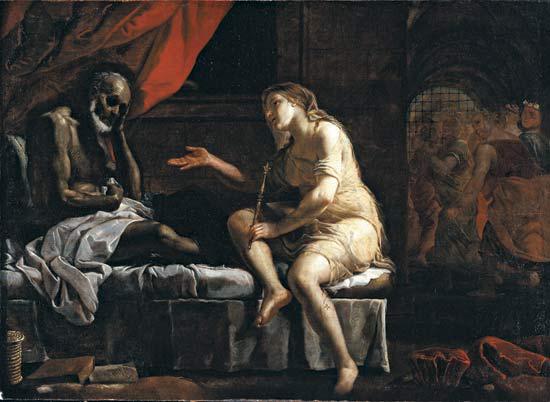
Boecio y la filosofía, por Mattia Preti, siglo XVII.
Publicado por Javier Bilbao
Mientras
leía vuestra carta conseguía olvidar mi infeliz estado, y me parecía
volver a aquellos manejos en los que en vano invertí tantas fatigas y
tiempo. (Nicolás Maquiavelo, 29 de abril de 1513)
El
esquema parece repetirse una y otra vez a lo largo de la historia:
alguien movido por la ambición personal o por el deseo de ver hechas
realidad las ideas sobre las que ha teorizado se mete en la arena
política, gracias a su talento logra ascender en la jerarquía,
aproximándose cada vez más a ese poder que tanto ansía y le deslumbra,
hasta que cual Ícaro ascendiendo al Sol o polilla que se acerca
demasiado a la bombilla termina siendo achicharrado sin piedad.
Entonces, derrotado políticamente, renegado por sus antiguos aliados,
expulsado de su cargo, partido, ciudad o país, encarcelado o hasta
condenado a muerte, recapacita en sus últimos días sobre qué es lo que
ha fallado, qué hubiera cambiado de tener una segunda oportunidad o
incluso sobre qué sentido tiene todo: la política, el poder, los
ideales, la libertad, la vida misma. Podría decirse que una parte
considerable de la literatura, teoría política y filosofía occidental
son los restos de una larga serie de naufragios personales. ¿Por qué?
¿Cuánto hay de causa o de consecuencia? ¿Fracasaron como políticos por
pensar demasiado o fue ese fiasco el que los dejó meditabundos? Decía Eurípides
que los sabios tienen dos lenguas, con una dicen la verdad y con la
otra lo que conviene a cada momento, ¿acaso les sobraba una de las dos
para medrar en la política? Quizá un breve repaso de alguno de los
nombres más significativos nos ayude a entenderlo.
El fundador de esta larga dinastía de pensadores caídos en desgracia tras acercarse al poder fue, naturalmente, Platón.
Pionero en este como en tantos otros campos, podría decirse que su
experiencia política en Siracusa es una idea platónica al respecto de la
que las posteriores son una pálida sombra, lo que seguramente le habría
encantado. En el año 387 a.C. visitó por primera vez a esta ciudad
situada en la isla de Sicilia, un viaje que repetiría más adelante en
otras dos ocasiones. Su pretensión era hacer del tirano que gobernaba
allí, Dionisio, un gobernante-filósofo a la manera en que teorizó en su obra La República.
Pero el alumno le salió díscolo: no sabemos si porque no le entendió, o
porque le entendió demasiado bien, terminaría desterrándolo y
vendiéndolo como esclavo en una ciudad vecina. Posteriormente lo
intentaría de nuevo con su hijo y sucesor en el poder, Dionisio II,
y nuevamente terminaría decepcionado. Su sociedad utópica era perfecta
en todos los aspectos salvo en el pequeño detalle de que resultaba
irrealizable en la práctica, pero al menos su intento de hacerla
realidad no le costó la vida.
Tres grandes pensadores romanos como Cicerón, Séneca y Boecio no
tuvieron esa suerte. El primero fue un jurista, filósofo y, ante todo,
excepcional orador, que dejó para la posteridad una serie de discursos
en torno a la amistad, los dioses, la política… Empleó a fondo su
elocuencia para defender la república y granjearse poderosos enemigos
que le llevaron en cierto momento de su vida a decir «estoy
profundamente arrepentido de vivir, nadie ha sido jamás víctima de una
calamidad tan grande; para nadie ha sido más deseable la muerte».
Terminó exiliado en su residencia de Tusculum dedicándose a la escritura
pero la llegada al poder en el 43 a. C. de Marco Antonio —contra
el que había dedicado inspirados discursos— supuso su final de una de
las peores maneras imaginables: le cortaron la cabeza y las manos, que
fueron exhibidas públicamente en Roma.
Y
no decimos la peor porque ahí está el caso de Séneca. Otro destacado
filósofo que alcanzó un gran poder en el Senado romano, por lo que
estuvo a punto de ser condenado a muerte por el emperador Calígula y luego por Claudio,
aunque este último conmutó la pena por el destierro a Córcega. Fue allí
donde nuestro pensador escribiría algunas de las obras que le dieron la
inmortalidad. Tras ocho años de exilio regresó a la política
convirtiéndose en el tutor y consejero de Nerón (y gobernante de
facto del imperio), pero viendo que al emperador su presencia cada vez
le resultaba más molesta, Séneca terminó retirándose de la vida pública.
Momento que de nuevo le serviría de inspiración literaria, hasta que de
todas maneras Nerón terminó ordenando su muerte, cría cuervos… Como
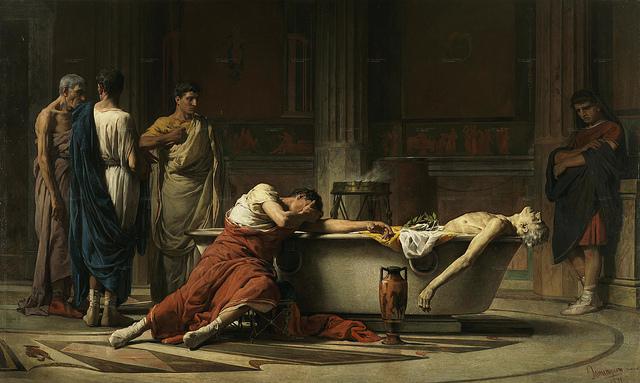
buen romano, Séneca prefirió entonces el suicidio cortándose las venas
primero, bebiendo cicuta después sin lograr que hiciera efecto y tomando
un baño caliente en el que finalmente le llegaría la muerte.
La muerte de Séneca, por Manuel Dominguez Sánchez.
El
tercero en desgracia fue Boecio. Nacido en Roma en el año 480, su
ascenso político fue fulgurante: llegó a ser senador a los veinticinco,
cónsul a los treinta, y apenas una década después consejero del rey Teodorico el Grande,
un cargo en el que tuvo un considerable poder político y que le
permitió atribuir sendos cargos de cónsules para sus hijos. Pero ese
mismo rey terminó enviándolo a prisión bajo la acusación de
conspiración. Había llegado a lo más alto con presteza y ahora de forma
aún más rápida lo había perdido todo ¿Cómo había sido tal cosa posible?
En sus largos meses de soledad en la celda, mientras esperaba el momento
de su ejecución, pensó en ello obsesivamente hasta darle forma en un
libro que le sobreviviría, Consolación de la filosofía.
Escrito de acuerdo a los cánones romanos de las consolaciones y a modo
de libro de memorias, de especulación filosófica y teológica, narra en
él su desgracia («yo que en mis mocedades componía hermosos versos, cuando todo a mi alrededor parecía sonreír, hoy me veo sumido en llanto, y ¡triste de mí!, solo puedo entonar estrofas de
dolor») y llega a la conclusión de que hay que sobrellevar los vaivenes
de la vida con estoicismo, pues la diosa Fortuna es caprichosa:
Hago
girar con rapidez mi rueda, y entonces me deleita ver cómo sube lo que
estaba abajo y se baja lo que estaba en alto. Súbete a ella, si quieres,
pero a condición de que cuando la ley de mi juego lo prescriba, no
consideres injusto el que te haga bajar.
Así
le habla cuando se aparece ante sus ojos en prisión, creando una imagen
que arraigaría con firmeza en la cultura europea durante los siglos
posteriores, como ya vimos aquí. Se
diría a la luz de los ejemplos que estamos viendo que esta diosa
generosa y cruel juega con todos nosotros, aunque parece tener especial
predilección por aquellos que se lanzaron al ruedo político.
Otro autor que influiría considerablemente en el imaginario occidental fue Dante Alighieri.
Nació en torno a 1265 y desde joven estuvo inmerso en las intrigas
políticas que dividían a los florentinos primero entre güelfos
(partidarios del Pontificado) y gibelinos (partidarios del Sacro Imperio
Romano Germánico) y —una vez fueron derrotados los segundos— entre
güelfos blancos y negros. Inicialmente la diosa Fortuna lo hizo ascender
a un alto cargo como magistrado y embajador de la ciudad pero en el año
1302 se deleitó en hacerlo caer estrepitosamente: los equilibrios
políticos que le habían beneficiado dieron un brusco giro y junto a
otros seiscientos güelfos blancos fue condenado al exilio para el resto
de su vida. Su caída en desgracia y su resentimiento hacia quienes le
traicionaron fueron sin embargo muy inspiradoras para su faceta de
escritor, pues apenas dos años después comenzó su gran obra, La divina comedia.
En este monumental poema se retrata a sí mismo caído en el infierno,
que irá recorriendo en sus nueve círculos acompañado por el poeta Virgilio.
En cada nivel descubrirá un tormento distinto para las almas allí
atrapadas, como espantosos ríos de sangre en los que se ahogan
eternamente, torbellinos, lluvias de fuego, fosos de resina hirviente,
cementerios con las almas enterradas hasta la cintura… y en cada lugar
casualmente va encontrándose a los diferentes enemigos políticos que
tuvo en Florencia. Esa parte, la del infierno, fue la primera que
escribió de La divina comedia —se estima que entre 1304 y 1307—
y fue la más brillante, la que le hizo entrar en el Olimpo de la
literatura universal. Más adelante en las cánticas del purgatorio y del
paraíso retrató a quienes les debía gratitud, como el señor de Verona,
que lo acogió en su exilio. Pero ya no era lo mismo.
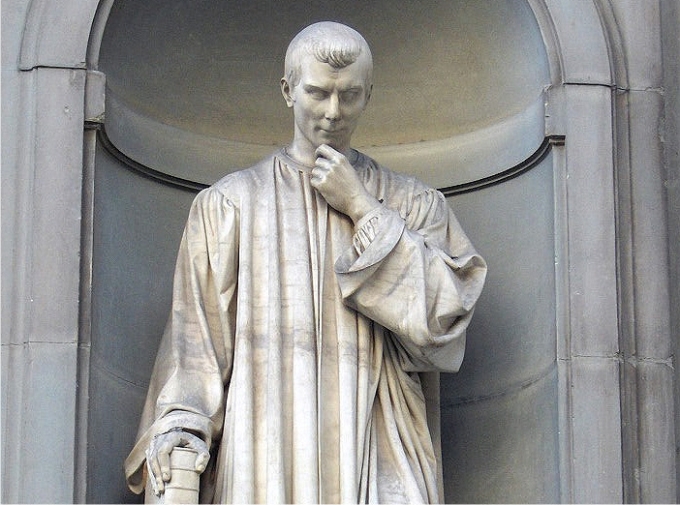
Estatua de Maquiavelo, por Lorenzo Bartolini. Foto Jebulon (CC)
Dos
siglos después nacería otro florentino con un destino similar en
ciertos aspectos, como si no hubiera vidas originales para todos y a
algunos les tocase una repetida. Estamos hablando de Nicolás Maquiavelo. Su gran oportunidad política llegó con la expulsión del poder de los Médici
en 1494. Fue entonces cuando comenzó su carrera de funcionario que le
haría ascender cuatro años después a canciller y secretario de la
Segunda Cancillería. Ejerció de embajador para su ciudad-estado ante
reyes, príncipes y papas, observándolos como un entomólogo a sus
insectos. Analizaba meticulosamente su comportamiento, escrutando cuándo
decían la verdad o iban de farol así como intentando prever su próxima
jugada (y lo hizo a menudo con gran acierto). Pero en 1512 el papa Julio II
impuso el regreso de los Médici al poder, haciendo acabar así la
república florentina y con ella la carrera política de Maquiavelo, que
fue sometido a torturas acusado de conspiración y posteriormente
condenado al exilio. En su retiro en una pequeña propiedad rural además
de leer a Dante comenzó a escribir inspirándose en su vida anterior,
plasmando sobre el papel sus observaciones sobre el poder. Nacería así El príncipe.
Si Maquiavelo es una de las figuras que encarnan el Renacimiento, Baltasar Gracián
lo es del Barroco. Los jesuitas han sido considerados tradicionalmente
como gente astuta y vinculada al poder y Gracián es un buen ejemplo de
ello. Formado en la orden de los jesuitas, tuvo siempre grandes
ambiciones políticas que le llevaron primero a trabar amistad con Vincencio Juan de Lastanosa,
un noble aragonés conocido por su mecenazgo cultural. Pero más adelante
quiso probar suerte en la Corte de Madrid, una experiencia que terminó
en un doloroso fracaso… y que de nuevo fue motivo de inspiración
literaria. Posteriormente escribiría obras como El Criticón, El Político y Oráculo manual y arte de prudencia. Este último influyó notablemente en filósofos como Schopenhauer y Nietzsche, aunque hoy día se haya convertido en un libro de autoayuda para ejecutivos al estilo de El arte de la guerra de Sun Tzu.
Es una colección de aforismos con los que aconseja al lector cómo ser
un buen cortesano arribista. Todos ellos giran en torno a ser taimado,
mentiroso, traicionero y manipulador hasta tal extremo de refinamiento y
perversidad que algunos críticos posteriores lo han considerado una
sutil parodia y una crítica implacable a las intrigas cortesanas que
tanto le escarmentaron y en general al ambiente imperante en cualquier
centro de poder. Todo político que se precie hoy día parece seguir su
máxima «ni por el hablar en la plaza se ha de sacar el sabio, pues no
habla allí con su voz, sino con la de la necedad común, por más que la
esté desmintiendo su interior». Y cualquier ciudadano en consecuencia
merece estar advertido por este otro:
Es
el oído la puerta segunda de la verdad y principal de la mentira. La
verdad ordinariamente se ve, extravagantemente se oye; raras vezes llega
en su elemento puro, y menos quando viene de lejos; siempre trae algo
de mixta, de los afectos por donde passa; tiñe de sus colores la passión
quanto toca, ya odiosa, ya favorable. Tira siempre a impressionar: gran
cuenta con quien alaba, mayor con quien vitupera. Es menester toda la
atención en este punto para descubrir la intención en el que tercia,
conociendo de antemano de qué pie se movió.
Tras
el Barroco llegó la Ilustración, y con ella un nutrido grupo de
intelectuales que cuestionaron el poder vigente y se subieron al carro
de la Revolución. En realidad el mismo concepto de «intelectual» podría
decirse que tiene aquí su nacimiento, en lo que tiene de escritor que
influye en la opinión pública en favor de alguna causa política.
Podríamos mencionar varios nombres pero un ejemplo paradigmático lo
tenemos en el caso de Nicolás de Condorcet. También recibió
formación de los jesuitas, lo que le permitió aprender sus argucias y
combatirlos luego de manera infatigable. Su aguda inteligencia le hizo
destacar en varios campos, siendo nombrado inspector general de la
Moneda. Pero su protagonismo llegaría con la Revolución Francesa, con él
como uno de sus principales ideólogos, ejecutores y, finalmente,
víctima de ella. Participó en la Asamblea legislativa, y por su
posicionamiento moderado se ganó la hostilidad de los jacobinos, que le
obligaron a permanecer oculto tras la orden de arresto que dictaron en
su contra. Durante ese periodo aprovechó para escribir Esbozo para un cuadro histórico de los progresos del espíritu humano, cuyo
optimista título parecía una amarga ironía en relación con la precaria
situación en la que vivía. Finalmente fue capturado por las autoridades y
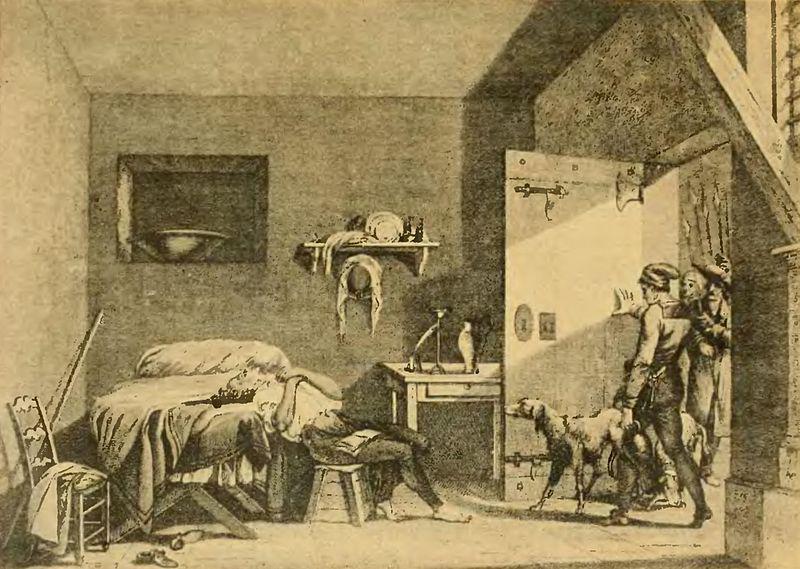
murió en su celda, aparentemente por suicidio, en el año 1794.
La muerte de Condorcet en prisión, de Alexandre-Évariste Fragonard.
Si
el siglo XVIII supuso la invención del intelectual, el XX los llevó a
su máximo apogeo. Algunos se distinguieron por apoyar la democracia
frente al fascismo, como en el caso español sin ir más lejos, con
figuras como Unamuno o Lorca, con un coste personal ya conocido: arresto domiciliario y asesinato. Otros se posicionaron según las modas o las convenienciasen un sentido u otro a lo largo de la guerra fría cultural, pero
la mayoría se manifestaron encendidamente partidarios de los
totalitarismos de diverso signo. Los motivos de esta cerrada adhesión a
regímenes que han llevado la tiranía y la muerte a millones de
individuos por parte de personas cultas e inteligentes —que ingenuamente
cabía suponer que apoyarían ideales ilustrados— han sido objeto de
profundos análisis (El opio de los intelectuales, de Raymond Aron oPasado imperfecto, de Tony Judt)
y requerirían otro artículo. La lista sería interminable, pero una
figura muy interesante y cuya trayectoria vital tuvo algo que ver con
otras que hemos mencionado es la de Albert Speer, que tras ser el arquitecto de Hitler
y su ministro de Armamentos, terminó cumpliendo condena en la cárcel de
Spandau tras los juicios de Núremberg. Allí escribió sus memorias, un
libro de lectura sencillamente imprescindible en el que volcó con mucho
detalle y a veces también cierta autoindulgencia su paso por el
epicentro mismo del Tercer Reich. Y ya que mencionamos el nazismo, para
concluir este breve recorrido regresando a los orígenes no podemos dejar
de citar la conocida anécdota sobre el filósofo Martin Heidegger,
cuando ocupó de nuevo su cátedra universitaria tras haber apoyado al
nazismo de forma entusiasta y un colega le preguntó burlonamente «¿de
vuelta de Siracusa?».
"Climate change is global-scale violence, against places and species as
well as against human beings. Once we call it by name, we can start
having a real conversation about our priorities and values. Because the
revolt against brutality begins with a revolt against the language that
hides that brutality."
If
you're poor, the only way you're likely to injure someone is the old
traditional way: artisanal violence, we could call it – by hands, by
knife, by club, or maybe modern hands-on violence, by gun or by car.
But
if you're tremendously wealthy, you can practice industrial-scale
violence without any manual labor on your own part. You can, say, build a
sweatshop factory that will collapse in Bangladesh and
kill more people than any hands-on mass murderer ever did, or you can
calculate risk and benefit about putting poisons or unsafe machines into
the world, as manufacturers do every day. If you're the leader of a
country, you can declare war and kill by the hundreds of thousands or
millions. And the nuclear superpowers – the US and Russia – still hold
the option of destroying quite a lot of life on Earth.
So do the carbon barons. But when we talk about violence, we almost always talk about violence from below, not above.
Or so I thought when I received a press release last week from a climate group announcing that "scientists say there is a direct link between changing climate and an increase in violence". What the scientists actually said, in a not-so-newsworthy article in Nature two
and a half years ago, is that there is higher conflict in the tropics
in El Nino years, and that perhaps this will scale up to make our age of
climate change also an era of civil and international conflict.
The message is that ordinary people will behave badly in an era of intensified climate change.
All
this makes sense, unless you go back to the premise and note that
climate change is itself violence. Extreme, horrific, longterm,
widespread violence.
So if we want to talk about violence and climate change – and we are talking about it, after last week's horrifying report from the world's top climate scientists –
then let's talk about climate change as violence. Rather than worrying
about whether ordinary human beings will react turbulently to the
destruction of the very means of their survival, let's worry about that
destruction – and their survival. Of course water failure, crop failure,
flooding and more will lead to mass migration and climate refugees – they already have – and this will lead to conflict. Those conflicts are being set in motion now.
You can regard the Arab Spring, in part, as a climate conflict: the increase in wheat prices was one of the triggers for
that series of revolts that changed the face of northernmost Africa and
the Middle East. On the one hand, you can say, how nice if those people
had not been hungry in the first place. On the other, how can you not
say, how great is it that those people stood up against being deprived
of sustenance and hope? And then you have to look at the systems that
created that hunger - the enormous economic inequalities in places such
as Egypt and the brutality used to keep down the people at the lower
levels of the social system, as well as the weather.
People revolt
when their lives are unbearable. Sometimes material reality creates
that unbearableness: droughts, plagues, storms, floods. But food and
medical care, health and well-being, access to housing and education –
these things are also governed by economic means and government policy.
That's what the revolt called Occupy Wall Street was against.
Climate
change will increase hunger as food prices rise and food production
falters, but we already have widespread hunger on Earth, and much of it
is due not to the failures of nature and farmers, but to systems of
distribution. Almost 16m children in
the United States now live with hunger, according to the US Department
of Agriculture, and that is not because the vast, agriculturally rich
United States cannot produce enough to feed all of us. We are a country
whose distribution system is itself a kind of violence.
Climate
change is not suddenly bringing about an era of equitable distribution. I
suspect people will be revolting in the coming future against what they
revolted against in the past: the injustices of the system. They should
revolt, and we should be glad they do, if not that they need to (though
hope they will recognize that violence is not necessarily where their
power lies). One of the events prompting the French Revolution was the failure of the 1788 wheat crop,
which made bread prices skyrocket and the poor go hungry. The insurance
against such events is often thought to be more authoritarianism and
more threats against the poor, but that's only an attempt to keep a lid
on what's boiling over; the other way to go is to turn down the heat.
The
same week during which I received that ill-thought-out press release
about climate and violence, Exxon Mobil Corporation issued a policy
report. It makes for boring reading, unless you can make the dry
language of business into pictures of the consequences of those acts
undertaken for profit. Exxon says:
We
are confident that none of our hydrocarbon reserves are now or will
become 'stranded'. We believe producing these assets is essential to
meeting growing energy demand worldwide.
Stranded
assets that mean carbon assets – coal, oil, gas still underground –
would become worthless if we decided they could not be extracted and
burned in the near future. Because scientists say that we need to leave
most of the world's known carbon reserves in the ground if we are to go
for the milder rather than the more extreme versions of climate change.
Under the milder version, countless more people – species, places – will
survive. In the best-case scenario, we damage the Earth less. We are
currently wrangling about how much to devastate the Earth.
In
every arena, we need to look at industrial-scale and systemic violence,
not just the hands-on violence of the less powerful. When it comes to
climate change, this is particularly true. Exxon has decided to bet that
we can't make the corporation keep its reserves in the ground, and the
company is reassuring its investors that it will continue to profit off
the rapid, violent and intentional destruction of the Earth.
That's
a tired phrase, the destruction of the Earth, but translate it into the
face of a starving child and a barren field – and then multiply that a
few million times. Or just picture the tiny bivalves: scallops, oysters,
Arctic sea snails that can't form shells in acidifying oceans right
now. Or another superstorm tearing apart another city. Climate change is
global-scale violence, against places and species as well as against
human beings. Once we call it by name, we can start having a real
conversation about our priorities and values. Because the revolt against
brutality begins with a revolt against the language that hides that
brutality.
Democracy was the most successful
political idea of the 20th century. Why has it run into trouble, and
what can be done to revive it?
The Economist - 1 março 2014
THE protesters who have overturned the politics of Ukraine have
many aspirations for their country. Their placards called for closer
relations with the European Union (EU), an end to Russian intervention
in Ukraine’s politics and the establishment of a clean government to
replace the kleptocracy of President Viktor Yanukovych. But their
fundamental demand is one that has motivated people over many decades to
take a stand against corrupt, abusive and autocratic governments. They
want a rules-based democracy.
It is easy to understand why.
Democracies are on average richer than non-democracies, are less likely
to go to war and have a better record of fighting corruption. More
fundamentally, democracy lets people speak their minds and shape their
own and their children’s futures. That so many people in so many
different parts of the world are prepared to risk so much for this idea
is testimony to its enduring appeal.
Yet these days the
exhilaration generated by events like those in Kiev is mixed with
anxiety, for a troubling pattern has repeated itself in capital after
capital. The people mass in the main square. Regime-sanctioned thugs try
to fight back but lose their nerve in the face of popular intransigence
and global news coverage. The world applauds the collapse of the regime
and offers to help build a democracy. But turfing out an autocrat turns
out to be much easier than setting up a viable democratic government.
The new regime stumbles, the economy flounders and the country finds
itself in a state at least as bad as it was before. This is what
happened in much of the Arab spring, and also in Ukraine’s Orange
revolution a decade ago. In 2004 Mr Yanukovych was ousted from office by
vast street protests, only to be re-elected to the presidency (with the
help of huge amounts of Russian money) in 2010, after the opposition
politicians who replaced him turned out to be just as hopeless.
Democracy
is going through a difficult time. Where autocrats have been driven out
of office, their opponents have mostly failed to create viable
democratic regimes. Even in established democracies, flaws in the system
have become worryingly visible and disillusion with politics is rife.
Yet just a few years ago democracy looked as though it would dominate
the world.
In the second half of the 20th century, democracies had
taken root in the most difficult circumstances possible—in Germany,
which had been traumatised by Nazism, in India, which had the world’s
largest population of poor people, and, in the 1990s, in South Africa,
which had been disfigured by apartheid. Decolonialisation created a host
of new democracies in Africa and Asia, and autocratic regimes gave way
to democracy in Greece (1974), Spain (1975), Argentina (1983), Brazil
(1985) and Chile (1989). The collapse of the Soviet Union created many
fledgling democracies in central Europe. By 2000 Freedom House, an
American think-tank, classified 120 countries, or 63% of the world
total, as democracies.
Representatives of more than 100 countries
gathered at the World Forum on Democracy in Warsaw that year to proclaim
that “the will of the people” was “the basis of the authority of
government”. A report issued by America’s State Department declared that
having seen off “failed experiments” with authoritarian and
totalitarian forms of government, “it seems that now, at long last,
democracy is triumphant.”
Such hubris was surely understandable
after such a run of successes. But stand farther back and the triumph of
democracy looks rather less inevitable. After the fall of Athens, where
it was first developed, the political model had lain dormant until the
Enlightenment more than 2,000 years later. In the 18th century only the
American revolution produced a sustainable democracy. During the 19th
century monarchists fought a prolonged rearguard action against
democratic forces. In the first half of the 20th century nascent
democracies collapsed in Germany, Spain and Italy. By 1941 there were
only 11 democracies left, and Franklin Roosevelt worried that it might
not be possible to shield “the great flame of democracy from the
blackout of barbarism”.
A high-water mark?
Freedom score, by country
Africa
Asia north
Asia south
Europe
Middle East
North America
South America
Not free
Partly free
Free
1972
Sources: Freedom House; The Economist
The
progress seen in the late 20th century has stalled in the 21st. Even
though around 40% of the world’s population, more people than ever
before, live in countries that will hold free and fair elections this
year, democracy’s global advance has come to a halt, and may even have
gone into reverse. Freedom House reckons that 2013 was the eighth
consecutive year in which global freedom declined, and that its forward
march peaked around the beginning of the century. Between 1980 and 2000
the cause of democracy experienced only a few setbacks, but since 2000
there have been many. And democracy’s problems run deeper than mere
numbers suggest. Many nominal democracies have slid towards autocracy,
maintaining the outward appearance of democracy through elections, but
without the rights and institutions that are equally important aspects
of a functioning democratic system.
Faith in democracy flares up
in moments of triumph, such as the overthrow of unpopular regimes in
Cairo or Kiev, only to sputter out once again. Outside the West,
democracy often advances only to collapse. And within the West,
democracy has too often become associated with debt and dysfunction at
home and overreach abroad. Democracy has always had its critics, but now
old doubts are being treated with renewed respect as the weaknesses of
democracy in its Western strongholds, and the fragility of its influence
elsewhere, have become increasingly apparent. Why has democracy lost
its forward momentum?
THE two main reasons are the financial crisis of 2007-08 and the
rise of China. The damage the crisis did was psychological as well as
financial. It revealed fundamental weaknesses in the West’s political
systems, undermining the self-confidence that had been one of their
great assets. Governments had steadily extended entitlements over
decades, allowing dangerous levels of debt to develop, and politicians
came to believe that they had abolished boom-bust cycles and tamed risk.
Many people became disillusioned with the workings of their political
systems—particularly when governments bailed out bankers with taxpayers’
money and then stood by impotently as financiers continued to pay
themselves huge bonuses. The crisis turned the Washington consensus into
a term of reproach across the emerging world.
Meanwhile, the
Chinese Communist Party has broken the democratic world’s monopoly on
economic progress. Larry Summers, of Harvard University, observes that
when America was growing fastest, it doubled living standards roughly
every 30 years. China has been doubling living standards roughly every
decade for the past 30 years. The Chinese elite argue that their
model—tight control by the Communist Party, coupled with a relentless
effort to recruit talented people into its upper ranks—is more efficient
than democracy and less susceptible to gridlock. The political
leadership changes every decade or so, and there is a constant supply of
fresh talent as party cadres are promoted based on their ability to hit
targets.
China’s critics rightly condemn the government
for controlling public opinion in all sorts of ways, from imprisoning
dissidents to censoring internet discussions. Yet the regime’s obsession
with control paradoxically means it pays close attention to public
opinion. At the same time China’s leaders have been able to tackle some
of the big problems of state-building that can take decades to deal with
in a democracy. In just two years China has extended pension coverage
to an extra 240m rural dwellers, for example—far more than the total
number of people covered by America’s public-pension system.
Many Chinese are prepared to put up with their system if it delivers
growth. The 2013 Pew Survey of Global Attitudes showed that 85% of
Chinese were “very satisfied” with their country’s direction, compared
with 31% of Americans. Some Chinese intellectuals have become positively
boastful. Zhang Weiwei of Fudan University argues that democracy is
destroying the West, and particularly America, because it
institutionalises gridlock, trivialises decision-making and throws up
second-rate presidents like George Bush junior. Yu Keping of Beijing
University argues that democracy makes simple things “overly complicated
and frivolous” and allows “certain sweet-talking politicians to mislead
the people”. Wang Jisi, also of Beijing University, has observed that
“many developing countries that have introduced Western values and
political systems are experiencing disorder and chaos” and that China
offers an alternative model. Countries from Africa (Rwanda) to the
Middle East (Dubai) to South-East Asia (Vietnam) are taking this advice
seriously.
China’s
advance is all the more potent in the context of a series of
disappointments for democrats since 2000. The first great setback was in
Russia. After the fall of the Berlin Wall in 1989 the democratisation
of the old Soviet Union seemed inevitable. In the 1990s Russia took a
few drunken steps in that direction under Boris Yeltsin. But at the end
of 1999 he resigned and handed power to Vladimir Putin, a former KGB
operative who has since been both prime minister and president twice.
This postmodern tsar has destroyed the substance of democracy in Russia,
muzzling the press and imprisoning his opponents, while preserving the
show—everyone can vote, so long as Mr Putin wins. Autocratic leaders in
Venezuela, Ukraine, Argentina and elsewhere have followed suit,
perpetuating a perverted simulacrum of democracy rather than doing away
with it altogether, and thus discrediting it further.
The next big
setback was the Iraq war. When Saddam Hussein’s fabled weapons of mass
destruction failed to materialise after the American-led invasion of
2003, Mr Bush switched instead to justifying the war as a fight for
freedom and democracy. “The concerted effort of free nations to promote
democracy is a prelude to our enemies’ defeat,” he argued in his second
inaugural address. This was more than mere opportunism: Mr Bush
sincerely believed that the Middle East would remain a breeding ground
for terrorism so long as it was dominated by dictators. But it did the
democratic cause great harm. Left-wingers regarded it as proof that
democracy was just a figleaf for American imperialism. Foreign-policy
realists took Iraq’s growing chaos as proof that American-led promotion
of democratisation was a recipe for instability. And disillusioned
neoconservatives such as Francis Fukuyama, an American political
scientist, saw it as proof that democracy cannot put down roots in stony
ground.
A third serious setback was Egypt. The collapse of Hosni
Mubarak’s regime in 2011, amid giant protests, raised hopes that
democracy would spread in the Middle East. But the euphoria soon turned
to despair. Egypt’s ensuing elections were won not by liberal activists
(who were hopelessly divided into a myriad of Pythonesque parties) but
by Muhammad Morsi’s Muslim Brotherhood. Mr Morsi treated democracy as a
winner-takes-all system, packing the state with Brothers, granting
himself almost unlimited powers and creating an upper house with a
permanent Islamic majority. In July 2013 the army stepped in, arresting
Egypt’s first democratically elected president, imprisoning leading
members of the Brotherhood and killing hundreds of demonstrators. Along
with war in Syria and anarchy in Libya, this has dashed the hope that
the Arab spring would lead to a flowering of democracy across the Middle
East.
Meanwhile
some recent recruits to the democratic camp have lost their lustre.
Since the introduction of democracy in 1994 South Africa has been ruled
by the same party, the African National Congress, which has become
progressively more self-serving. Turkey, which once seemed to combine
moderate Islam with prosperity and democracy, is descending into
corruption and autocracy. In Bangladesh, Thailand and Cambodia,
opposition parties have boycotted recent elections or refused to accept
their results.
All this has demonstrated that building the
institutions needed to sustain democracy is very slow work indeed, and
has dispelled the once-popular notion that democracy will blossom
rapidly and spontaneously once the seed is planted. Although democracy
may be a “universal aspiration”, as Mr Bush and Tony Blair insisted, it
is a culturally rooted practice. Western countries almost all extended
the right to vote long after the establishment of sophisticated
political systems, with powerful civil services and entrenched
constitutional rights, in societies that cherished the notions of
individual rights and independent judiciaries.
Anti-austerity protests in Greece, October 2010
“Nothing is more wonderful than the art of being free, but nothing is harder to learn how to use than freedom.” Alexis de Tocqueville, “Democracy in America”
Yet
in recent years the very institutions that are meant to provide models
for new democracies have come to seem outdated and dysfunctional in
established ones. The United States has become a byword for gridlock, so
obsessed with partisan point-scoring that it has come to the verge of
defaulting on its debts twice in the past two years. Its democracy is
also corrupted by gerrymandering, the practice of drawing constituency
boundaries to entrench the power of incumbents. This encourages
extremism, because politicians have to appeal only to the party
faithful, and in effect disenfranchises large numbers of voters. And
money talks louder than ever in American politics. Thousands of
lobbyists (more than 20 for every member of Congress) add to the length
and complexity of legislation, the better to smuggle in special
privileges. All this creates the impression that American democracy is
for sale and that the rich have more power than the poor, even as
lobbyists and donors insist that political expenditure is an exercise in
free speech. The result is that America’s image—and by extension that
of democracy itself—has taken a terrible battering.
Nor is the EU a
paragon of democracy. The decision to introduce the euro in 1999 was
taken largely by technocrats; only two countries, Denmark and Sweden,
held referendums on the matter (both said no). Efforts to win popular
approval for the Lisbon Treaty, which consolidated power in Brussels,
were abandoned when people started voting the wrong way. During the
darkest days of the euro crisis the euro-elite forced Italy and Greece
to replace democratically elected leaders with technocrats. The European
Parliament, an unsuccessful attempt to fix Europe’s democratic deficit,
is both ignored and despised. The EU has become a breeding ground for
populist parties, such as Geert Wilders’s Party for Freedom in the
Netherlands and Marine Le Pen’s National Front in France, which claim to
defend ordinary people against an arrogant and incompetent elite.
Greece’s Golden Dawn is testing how far democracies can tolerate
Nazi-style parties. A project designed to tame the beast of European
populism is instead poking it back into life.
EVEN in its heartland, democracy is clearly suffering from
serious structural problems, rather than a few isolated ailments. Since
the dawn of the modern democratic era in the late 19th century,
democracy has expressed itself through nation-states and national
parliaments. People elect representatives who pull the levers of
national power for a fixed period. But this arrangement is now under
assault from both above and below.
From above, globalisation has
changed national politics profoundly. National politicians have
surrendered ever more power, for example over trade and financial flows,
to global markets and supranational bodies, and may thus find that they
are unable to keep promises they have made to voters. International
organisations such as the International Monetary Fund, the World Trade
Organisation and the European Union have extended their influence. There
is a compelling logic to much of this: how can a single country deal
with problems like climate change or tax evasion? National politicians
have also responded to globalisation by limiting their discretion and
handing power to unelected technocrats in some areas. The number of
countries with independent central banks, for example, has increased
from about 20 in 1980 to more than 160 today.
From below come
equally powerful challenges: from would-be breakaway nations, such as
the Catalans and the Scots, from Indian states, from American city
mayors. All are trying to reclaim power from national governments. There
are also a host of what Moisés Naim, of the Carnegie Endowment for
International Peace, calls “micro-powers”, such as NGOs and lobbyists,
which are disrupting traditional politics and making life harder for
democratic and autocratic leaders alike. The internet makes it easier to
organise and agitate; in a world where people can participate in
reality-TV votes every week, or support a petition with the click of a
mouse, the machinery and institutions of parliamentary democracy, where
elections happen only every few years, look increasingly anachronistic.
Douglas Carswell, a British member of parliament, likens traditional
politics to HMV, a chain of British record shops that went bust, in a
world where people are used to calling up whatever music they want
whenever they want via Spotify, a popular digital music-streaming
service.
The
biggest challenge to democracy, however, comes neither from above nor
below but from within—from the voters themselves. Plato’s great worry
about democracy, that citizens would “live from day to day, indulging
the pleasure of the moment”, has proved prescient. Democratic
governments got into the habit of running big structural deficits as a
matter of course, borrowing to give voters what they wanted in the short
term, while neglecting long-term investment. France and Italy have not
balanced their budgets for more than 30 years. The financial crisis
starkly exposed the unsustainability of such debt-financed democracy.
With
the post-crisis stimulus winding down, politicians must now confront
the difficult trade-offs they avoided during years of steady growth and
easy credit. But persuading voters to adapt to a new age of austerity
will not prove popular at the ballot box. Slow growth and tight budgets
will provoke conflict as interest groups compete for limited resources.
To make matters worse, this competition is taking place as Western
populations are ageing. Older people have always been better at getting
their voices heard than younger ones, voting in greater numbers and
organising pressure groups like America’s mighty AARP. They will
increasingly have absolute numbers on their side. Many democracies now
face a fight between past and future, between inherited entitlements and
future investment.
Adjusting to hard times will be made even more
difficult by a growing cynicism towards politics. Party membership is
declining across the developed world: only 1% of Britons are now members
of political parties compared with 20% in 1950. Voter turnout is
falling, too: a study of 49 democracies found that it had declined by 10
percentage points between 1980-84 and 2007-13. A survey of seven
European countries in 2012 found that more than half of voters “had no
trust in government” whatsoever. A YouGov opinion poll of British voters
in the same year found that 62% of those polled agreed that
“politicians tell lies all the time”.
Meanwhile the border between
poking fun and launching protest campaigns is fast eroding. In 2010
Iceland’s Best Party, promising to be openly corrupt, won enough votes
to co-run Reykjavik’s city council. And in 2013 a quarter of Italians
voted for a party founded by Beppe Grillo, a comedian. All this popular
cynicism about politics might be healthy if people demanded little from
their governments, but they continue to want a great deal. The result
can be a toxic and unstable mixture: dependency on government on the one
hand, and disdain for it on the other. The dependency forces government
to overexpand and overburden itself, while the disdain robs it of its
legitimacy. Democratic dysfunction goes hand in hand with democratic
distemper.
Spotifying politics
Democracy’s
problems in its heartland help explain its setbacks elsewhere.
Democracy did well in the 20th century in part because of American
hegemony: other countries naturally wanted to emulate the world’s
leading power. But as China’s influence has grown, America and Europe
have lost their appeal as role models and their appetite for spreading
democracy. The Obama administration now seems paralysed by the fear that
democracy will produce rogue regimes or empower jihadists. And why
should developing countries regard democracy as the ideal form of
government when the American government cannot even pass a budget, let
alone plan for the future? Why should autocrats listen to lectures on
democracy from Europe, when the euro-elite sacks elected leaders who get
in the way of fiscal orthodoxy?
At
the same time, democracies in the emerging world have encountered the
same problems as those in the rich world. They too have overindulged in
short-term spending rather than long-term investment. Brazil allows
public-sector workers to retire at 53 but has done little to create a
modern airport system. India pays off vast numbers of client groups but
invests too little in infrastructure. Political systems have been
captured by interest groups and undermined by anti-democratic habits.
Patrick French, a British historian, notes that every member of India’s
lower house under the age of 30 is a member of a political dynasty. Even
within the capitalist elite, support for democracy is fraying: Indian
business moguls constantly complain that India’s chaotic democracy
produces rotten infrastructure while China’s authoritarian system
produces highways, gleaming airports and high-speed trains.
Democracy
has been on the back foot before. In the 1920s and 1930s communism and
fascism looked like the coming things: when Spain temporarily restored
its parliamentary government in 1931, Benito Mussolini likened it to
returning to oil lamps in the age of electricity. In the mid-1970s Willy
Brandt, a former German chancellor, pronounced that “western Europe has
only 20 or 30 more years of democracy left in it; after that it will
slide, engineless and rudderless, under the surrounding sea of
dictatorship”. Things are not that bad these days, but China poses a far
more credible threat than communism ever did to the idea that democracy
is inherently superior and will eventually prevail.
Yet China’s
stunning advances conceal deeper problems. The elite is becoming a
self-perpetuating and self-serving clique. The 50 richest members of the
China’s National People’s Congress are collectively worth $94.7
billion—60 times as much as the 50 richest members of America’s
Congress. China’s growth rate has slowed from 10% to below 8% and is
expected to fall further—an enormous challenge for a regime whose
legitimacy depends on its ability to deliver consistent growth.
At
the same time, as Alexis de Tocqueville pointed out in the 19th
century, democracies always look weaker than they really are: they are
all confusion on the surface but have lots of hidden strengths. Being
able to install alternative leaders offering alternative policies makes
democracies better than autocracies at finding creative solutions to
problems and rising to existential challenges, though they often take a
while to zigzag to the right policies. But to succeed, both fledgling
and established democracies must ensure they are built on firm
foundations.
THE most striking thing about the founders of modern democracy
such as James Madison and John Stuart Mill is how hard-headed they were.
They regarded democracy as a powerful but imperfect mechanism:
something that needed to be designed carefully, in order to harness
human creativity but also to check human perversity, and then kept in
good working order, constantly oiled, adjusted and worked upon.
The
need for hard-headedness is particularly pressing when establishing a
nascent democracy. One reason why so many democratic experiments have
failed recently is that they put too much emphasis on elections and too
little on the other essential features of democracy. The power of the
state needs to be checked, for instance, and individual rights such as
freedom of speech and freedom to organise must be guaranteed. The most
successful new democracies have all worked in large part because they
avoided the temptation of majoritarianism—the notion that winning an
election entitles the majority to do whatever it pleases. India has
survived as a democracy since 1947 (apart from a couple of years of
emergency rule) and Brazil since the mid-1980s for much the same reason:
both put limits on the power of the government and provided guarantees
for individual rights.
Robust constitutions not only promote
long-term stability, reducing the likelihood that disgruntled minorities
will take against the regime. They also bolster the struggle against
corruption, the bane of developing countries. Conversely, the first sign
that a fledgling democracy is heading for the rocks often comes when
elected rulers try to erode constraints on their power—often in the name
of majority rule. Mr Morsi tried to pack Egypt’s upper house with
supporters of the Muslim Brotherhood. Mr Yanukovych reduced the power of
Ukraine’s parliament. Mr Putin has ridden roughshod over Russia’s
independent institutions in the name of the people. Several African
leaders are engaging in crude majoritarianism—removing term limits on
the presidency or expanding penalties against homosexual behaviour, as
Uganda’s president Yoweri Museveni did on February 24th.
Foreign
leaders should be more willing to speak out when rulers engage in such
illiberal behaviour, even if a majority supports it. But the people who
most need to learn this lesson are the architects of new democracies:
they must recognise that robust checks and balances are just as vital to
the establishment of a healthy democracy as the right to vote.
Paradoxically even potential dictators have a lot to learn from events
in Egypt and Ukraine: Mr Morsi would not be spending his life shuttling
between prison and a glass box in an Egyptian court, and Mr Yanukovych
would not be fleeing for his life, if they had not enraged their
compatriots by accumulating so much power.
Video
Democracy: A view from Cairo
Even
those lucky enough to live in mature democracies need to pay close
attention to the architecture of their political systems. The
combination of globalisation and the digital revolution has made some of
democracy’s most cherished institutions look outdated. Established
democracies need to update their own political systems both to address
the problems they face at home, and to revitalise democracy’s image
abroad. Some countries have already embarked upon this process.
America’s Senate has made it harder for senators to filibuster
appointments. A few states have introduced open primaries and handed
redistricting to independent boundary commissions. Other obvious changes
would improve matters. Reform of party financing, so that the names of
all donors are made public, might reduce the influence of special
interests. The European Parliament could require its MPs to present
receipts with their expenses. Italy’s parliament has far too many
members who are paid too much, and two equally powerful chambers, which
makes it difficult to get anything done.
But reformers need to be
much more ambitious. The best way to constrain the power of special
interests is to limit the number of goodies that the state can hand out.
And the best way to address popular disillusion towards politicians is
to reduce the number of promises they can make. The key to a healthier
democracy, in short, is a narrower state—an idea that dates back to the
American revolution. “In framing a government which is to be
administered by men over men”, Madison argued, “the great difficulty
lies in this: you must first enable the government to control the
governed; and in the next place oblige it to control itself.” The notion
of limited government was also integral to the relaunch of democracy
after the second world war. The United Nations Charter (1945) and the
Universal Declaration of Human Rights (1948) established rights and
norms that countries could not breach, even if majorities wanted to do
so.
These
checks and balances were motivated by fear of tyranny. But today,
particularly in the West, the big dangers to democracy are harder to
spot. One is the growing size of the state. The relentless expansion of
government is reducing liberty and handing ever more power to special
interests. The other comes from government’s habit of making promises
that it cannot fulfil, either by creating entitlements it cannot pay for
or by waging wars that it cannot win, such as that on drugs. Both
voters and governments must be persuaded of the merits of accepting
restraints on the state’s natural tendency to overreach. Giving control
of monetary policy to independent central banks tamed the rampant
inflation of the 1980s, for example. It is time to apply the same
principle of limited government to a broader range of policies. Mature
democracies, just like nascent ones, require appropriate checks and
balances on the power of elected government.
Governments can
exercise self-restraint in several different ways. They can put on a
golden straitjacket by adopting tight fiscal rules—as the Swedes have
done by pledging to balance their budget over the economic cycle. They
can introduce “sunset clauses” that force politicians to renew laws
every ten years, say. They can ask non-partisan commissions to propose
long-term reforms. The Swedes rescued their pension system from collapse
when an independent commission suggested pragmatic reforms including
greater use of private pensions, and linking the retirement age to
life-expectancy. Chile has been particularly successful at managing the
combination of the volatility of the copper market and populist pressure
to spend the surplus in good times. It has introduced strict rules to
ensure that it runs a surplus over the economic cycle, and appointed a
commission of experts to determine how to cope with economic volatility.
Isn’t
this a recipe for weakening democracy by handing more power to the
great and the good? Not necessarily. Self-denying rules can strengthen
democracy by preventing people from voting for spending policies that
produce bankruptcy and social breakdown and by protecting minorities
from persecution. But technocracy can certainly be taken too far. Power
must be delegated sparingly, in a few big areas such as monetary policy
and entitlement reform, and the process must be open and transparent.
And
delegation upwards towards grandees and technocrats must be balanced by
delegation downwards, handing some decisions to ordinary people. The
trick is to harness the twin forces of globalism and localism, rather
than trying to ignore or resist them. With the right balance of these
two approaches, the same forces that threaten established democracies
from above, through globalisation, and below, through the rise of
micro-powers, can reinforce rather than undermine democracy.
Tocqueville
argued that local democracy frequently represented democracy at its
best: “Town-meetings are to liberty what primary schools are to science;
they bring it within the people’s reach, they teach men how to use and
enjoy it.” City mayors regularly get twice the approval ratings of
national politicians. Modern technology can implement a modern version
of Tocqueville’s town-hall meetings to promote civic involvement and
innovation. An online hyperdemocracy where everything is put to an
endless series of public votes would play to the hand of
special-interest groups. But technocracy and direct democracy can keep
each other in check: independent budget commissions can assess the cost
and feasibility of local ballot initiatives, for example.
Voters in California cast their ballots, November 2012
“You must first enable the government to control the governed; and in the next place oblige it to control itself.”James Madison, America's fourth president
Several
places are making progress towards getting this mixture right. The most
encouraging example is California. Its system of direct democracy
allowed its citizens to vote for contradictory policies, such as higher
spending and lower taxes, while closed primaries and gerrymandered
districts institutionalised extremism. But over the past five years
California has introduced a series of reforms, thanks in part to the
efforts of Nicolas Berggruen, a philanthropist and investor. The state
has introduced a “Think Long” committee to counteract the short-term
tendencies of ballot initiatives. It has introduced open primaries and
handed power to redraw boundaries to an independent commission. And it
has succeeded in balancing its budget—an achievement which Darrell
Steinberg, the leader of the California Senate, described as “almost
surreal”.
Similarly, the Finnish government has set up a
non-partisan commission to produce proposals for the future of its
pension system. At the same time it is trying to harness e-democracy:
parliament is obliged to consider any citizens’ initiative that gains
50,000 signatures. But many more such experiments are needed—combining
technocracy with direct democracy, and upward and downward delegation—if
democracy is to zigzag its way back to health.
John Adams,
America’s second president, once pronounced that “democracy never lasts
long. It soon wastes, exhausts and murders itself. There never was a
democracy yet that did not commit suicide.” He was clearly wrong.
Democracy was the great victor of the ideological clashes of the 20th
century. But if democracy is to remain as successful in the 21st century
as it was in the 20th, it must be both assiduously nurtured when it is
young—and carefully maintained when it is mature.




 Postagens

